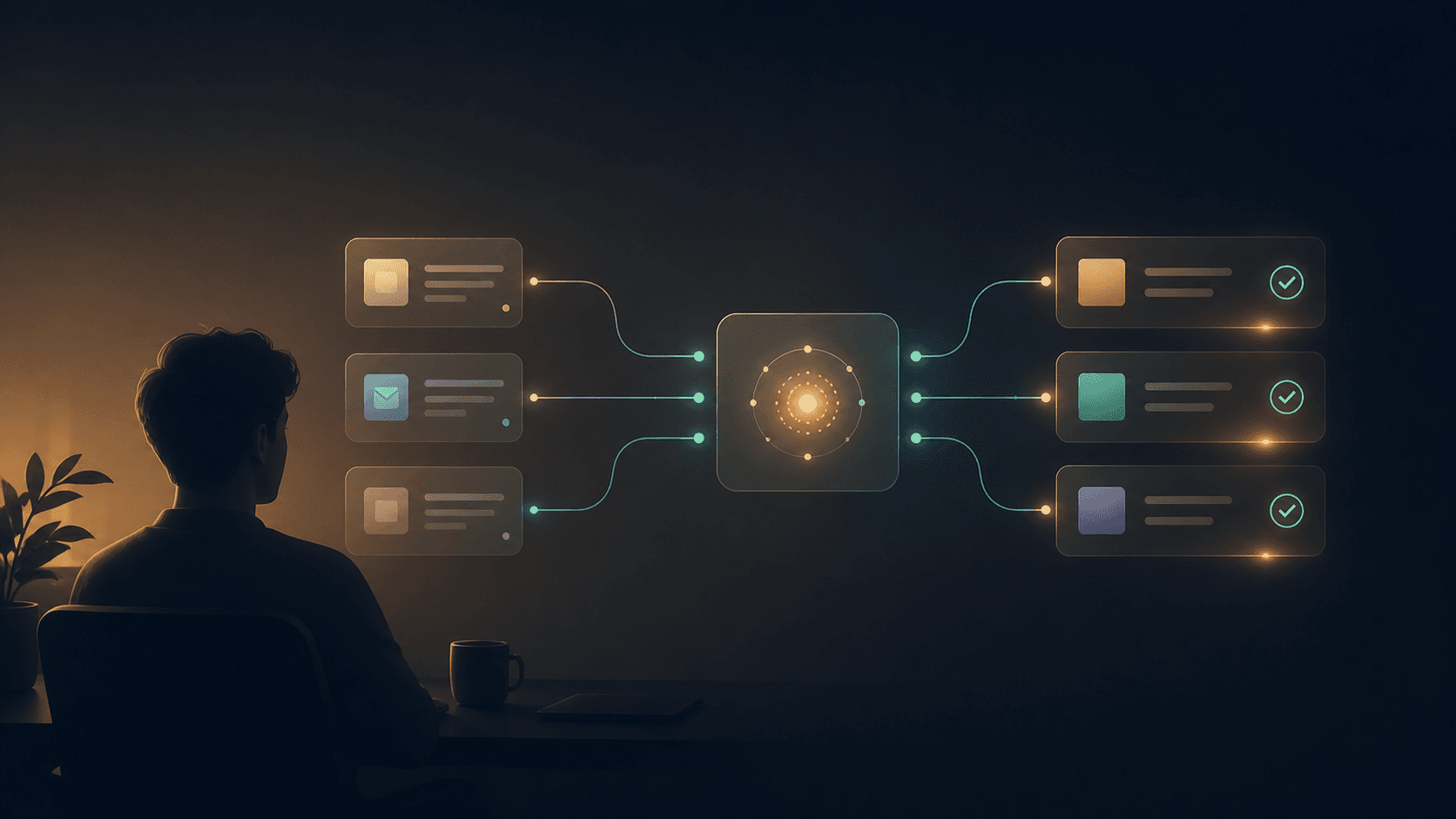
How to Automate Email Responses with AI in 2026: 3 Methods That Actually Work
TL;DR: AI email automation can handle 70-80% of routine emails automatically. This guide covers three practical approaches: Gmail filters + templates, n8n workflows, and custom Python solutions. Most small businesses save 5-10 hours per week.
Your inbox has 247 unread emails, and half are the same questions you answered yesterday. Manual email management costs businesses an average of 2.5 hours daily per employee in 2026. This guide shows you three proven methods to automate email responses without losing the personal touch.
Understanding AI Email Automation in Practice
AI email automation analyzes incoming messages and generates appropriate responses based on:
• Content analysis - Understanding what the sender is asking • Intent classification - Categorizing requests (support, sales, info) • Response matching - Selecting or generating the right reply • Learning patterns - Improving responses over time
The technology works by scanning email content, identifying key phrases and context, then either selecting from pre-written templates or generating new responses using language models.
Tip: Start with simple automation for FAQ responses before moving to complex customer service scenarios.
Three Approaches to Email Automation
| Method | Setup Time | Monthly Cost | Difficulty | Best For |
|---|---|---|---|---|
| Gmail Filters + Templates | 30 minutes | $0 | Beginner | Personal use, simple sorting |
| n8n Workflows | 2-3 hours | $20-50 | Intermediate | Small businesses |
| Custom Python Solution | 5-10 hours | $10-30 | Advanced | High-volume, custom needs |
Method 1: Gmail Smart Compose and Filters
Gmail's built-in features handle basic automation without third-party tools.
Setup process:
- Enable Smart Compose in Gmail settings
- Create filters for common email types
- Set up canned responses for frequent replies
- Use labels for automatic organization
Real example: A freelance designer receives 20+ project inquiries weekly. Gmail filters automatically label "New Project" emails and suggest responses based on previous replies.
User scenarios:
• Solo founder: Auto-sort investor emails, customer feedback, and partnership requests
• Small business: Categorize orders, support tickets, and vendor communications
• Content creator: Manage collaboration requests, fan mail, and business inquiries
Method 2: n8n Visual Workflow Automation
n8n connects your email with AI services for intelligent responses.
What you'll need: • n8n account (self-hosted or cloud) • Email provider API access • AI service (OpenAI, Anthropic Claude, or Groq)
Basic workflow setup:
Email Trigger → AI Analysis → Response Generation → Send Reply
Step-by-step implementation:
- Create new n8n workflow
- Add Gmail/Outlook trigger node
- Connect OpenAI or Claude node for content analysis
- Add conditional logic for different response types
- Set up email sender node for replies
Cost breakdown for small business: • n8n Cloud: $20/month • OpenAI API: $10-30/month (depending on volume) • Total: $30-50/month for 1,000+ automated emails
Tip: Test workflows with a dedicated email address before connecting to your main business email.
Method 3: Custom Python Email Bot
For developers or businesses needing full control, Python offers unlimited customization.
Required libraries:
pip install imaplib email openai python-dotenv schedule
Basic automation script structure:
import imaplib
import email
import openai
from email.mime.text import MIMEText
import smtplib

def check_emails():
    # Connect to email server
    mail = imaplib.IMAP4_SSL('imap.gmail.com')
    mail.login(email_user, email_pass)

    # Process unread emails
    # Analyze content with AI
    # Generate and send responses

def generate_response(email_content):
    response = openai.ChatCompletion.create(
        model="gpt-3.5-turbo",
        messages=[
            {"role": "system", "content": "You are a helpful email assistant"},
            {"role": "user", "content": f"Respond to: {email_content}"}
        ]
    )
    return response.choices[0].message.content
Advanced features you can add: • Sentiment analysis for priority routing • CRM integration for customer history • Multi-language support • Custom training on your email style
Real User Success Stories
Sarah, E-commerce Store Owner: "My store gets 100+ customer service emails daily. n8n workflows now handle 75% automatically - order status, shipping questions, return policies. Response time dropped from 4 hours to 15 minutes."
Mike, Marketing Consultant: "Python script processes client onboarding emails. Automatically sends welcome packages, schedules calls, and updates my CRM. Saves 8 hours weekly."
Lisa, Newsletter Creator: "Gmail filters sort subscriber emails by topic. Smart replies handle common questions about subscriptions and content. Increased response rate by 40%."
Common Challenges and Solutions
False positive responses: • Start with high-confidence matches only • Always include "Reply STOP for human assistance" • Regular audit of automated responses
Maintaining personal touch: • Use your actual writing samples for AI training • Include personal signatures and contact info • Set up escalation for complex queries
Integration issues: • Test with small email volumes first • Keep manual override options available • Monitor delivery rates and spam scores
Tip: Never automate sensitive topics like complaints, legal issues, or financial problems without human review.
Cost and Time Savings Analysis
Typical time savings by user type:
Solo Founder: • Before: 2 hours daily on email • After: 45 minutes daily • Savings: $150-300/week (at $25/hour value)
Small Business (5 employees):
• Before: 12.5 hours daily team-wide
• After: 4 hours daily
• Savings: $1,000-2,000/week
Content Creator: • Before: 1.5 hours daily • After: 20 minutes daily • Savings: Time for 2-3 additional content pieces weekly
Getting Started This Week
Day 1-2: Choose your method based on technical comfort and volume needs Day 3-4: Set up basic automation with simple responses Day 5-6: Test with small subset of emails Day 7: Go live with monitoring for first week
Essential first automations:
• Out-of-office replies with context
• FAQ responses for common questions
• Email categorization and routing
• Meeting scheduling confirmations
Tip: Start with read-only analysis before enabling automatic replies. This builds confidence in the system's accuracy.
Advanced Features for 2026
AI capabilities getting better: • Context awareness across email threads • Integration with calendar and CRM data • Voice-to-email response generation • Multi-language detection and response
Emerging tools to watch: • Microsoft Copilot for Outlook automation • Google Workspace AI features • Zapier's enhanced AI actions • Custom GPT models for email
The email automation landscape in 2026 offers solutions for every skill level and budget. Start simple, measure results, and gradually add complexity as you see value.
You may also want to read:
• Building Custom AI Workflows with n8n: Complete 2026 Guide
• Python Automation Scripts for Small Business: 15 Time-Savers
• AI Content Creation Tools Comparison: What Works in 2026