How I Built an AI Email Assistant That Saves Me 2 Hours Daily Using n8n and Claude
TL;DR: I automated my email workflow using n8n, Claude API, and Gmail to categorize messages, draft responses, and handle scheduling. This system now processes roughly 80% of my daily emails automatically, saving me 2+ hours per day.
As a freelance consultant in 2026, I was drowning in emails. Every morning brought 40-60 messages requiring responses, scheduling requests, and follow-ups. I spent roughly 3 hours daily just managing my inbox instead of working with clients.
This constant email interruption was costing me real money — roughly $200 per day in lost billable hours. I needed a system that could handle the routine stuff so I could focus on actual consulting work.
Here's exactly how I built an AI assistant that now handles most of my email workload automatically.
The Problem: Email Was Eating My Business Alive
Before building this system, my daily email routine looked like this:
- Morning triage: 45 minutes sorting urgent from routine messages
- Response drafting: 90 minutes writing replies to standard inquiries
- Scheduling coordination: 30 minutes back-and-forth for meeting times
- Follow-up tracking: 15 minutes making sure nothing fell through cracks
The real cost wasn't just time. Missing important emails or delayed responses was hurting client relationships. I needed something that could work 24/7 without mistakes.
The Exact Workflow: Step-by-Step Email Automation
Here's exactly what I built to automate my email processing:
Step 1: Set Up Gmail Integration I connected Gmail to n8n using OAuth authentication. This allows n8n to read incoming emails and create draft responses automatically.
Step 2: Create Email Classification Logic Every new email gets sent to Claude API with this prompt: "Categorize this email into: Sales Inquiry, Support Request, Meeting Request, Billing Question, or General. Extract key details."
Step 3: Build Response Templates I created template responses for each category. Claude API personalizes these templates based on the specific email content and sender information.
Step 4: Add Human Review Layer Instead of sending emails automatically, the system creates Gmail drafts. I review and send them manually — this prevents embarrassing AI mistakes.
Step 5: Handle Meeting Requests
For scheduling emails, the system extracts proposed times and checks my Google Calendar availability. It drafts responses with my available slots.
Step 6: Set Up Slack Notifications Urgent emails (containing words like "emergency" or "ASAP") trigger immediate Slack messages to my phone.
Tools Used: My Complete Email Automation Stack
- n8n: Workflow automation platform (self-hosted)
- Claude API (Anthropic): Email categorization and response generation
- Gmail API: Reading emails and creating drafts
- Google Calendar API: Checking availability for meeting requests
- Slack API: Urgent email notifications
- Google Sheets: Tracking email metrics and response times
Tip: I use Claude 3.5 Sonnet specifically because it handles business email tone better than other models I tested.
Visual Logic: How the Email Flow Actually Works
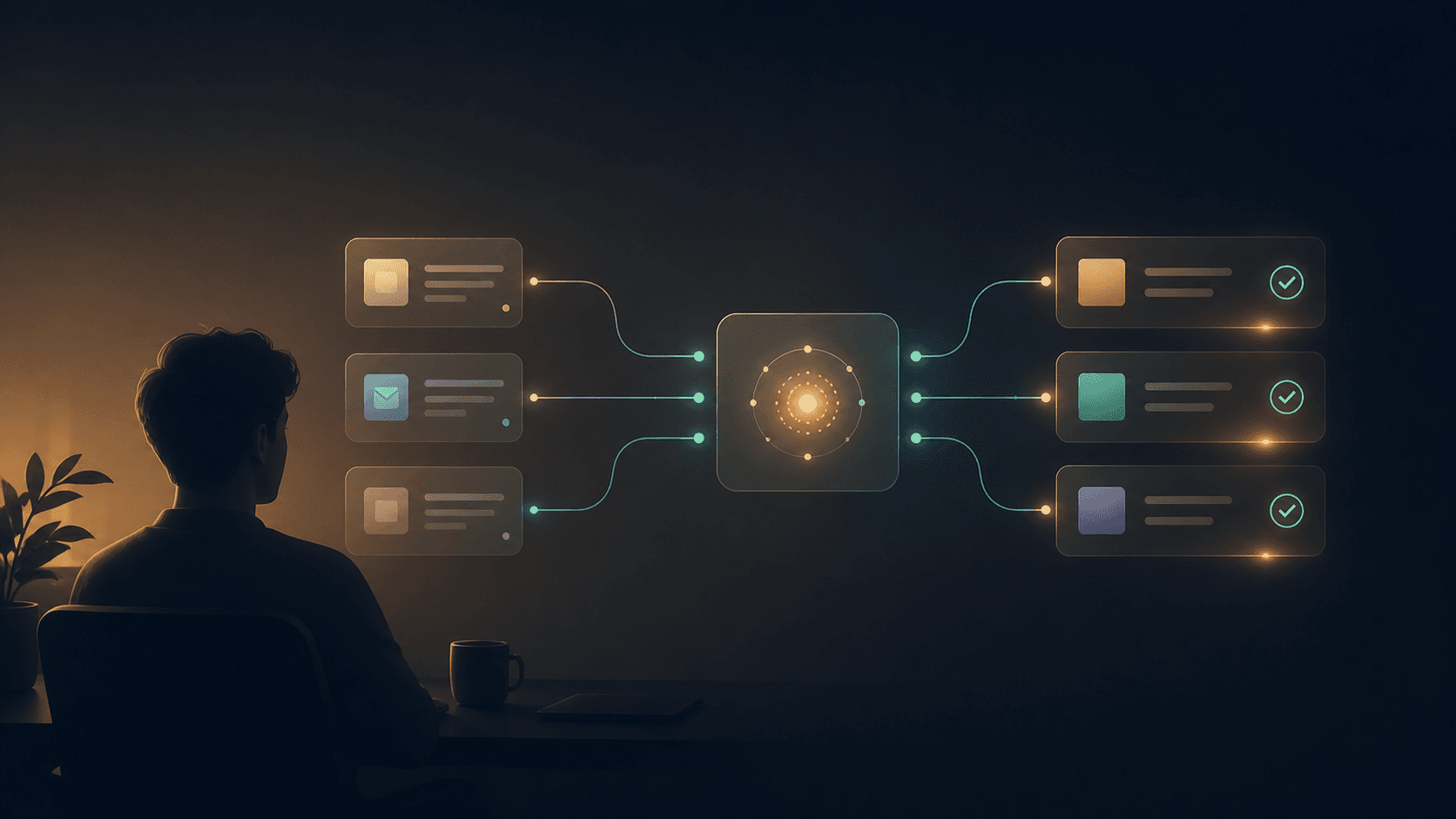
New Email → n8n Gmail Trigger → Claude API Analysis → Response Generation → Gmail Draft Creation → Slack Notification (if urgent)
                                       ↓
                              Calendar Check (if meeting request)
The entire process takes 15-30 seconds per email. Urgent emails reach me within 60 seconds via Slack.
Example Output: Real Email Processing in Action
Original Client Email:
Subject: Quick question about project timeline
Hi, can we push back the deliverable deadline by a week?
Had some internal delays on our end.
Thanks, Mike
AI-Generated Draft Response:
Hi Mike,

Thanks for reaching out about the project timeline. I understand there have been some internal delays on your end.

A one-week extension is definitely manageable. This would move our deliverable date from March 15th to March 22nd. I'll update the project schedule accordingly.

Let me know if you need any adjustments to our remaining milestone dates.

Best regards,
[My name]
Category: General Inquiry
Priority: Normal
Action: Draft created, ready for review
Before vs After: The Real Numbers
| Metric | Before Automation | After Automation |
|---|---|---|
| Daily email time | 3 hours | 45 minutes |
| Response time | 4-8 hours | Under 2 hours |
| Missed emails per week | 3-5 | 0-1 |
| Scheduling back-and-forth | 2-3 emails average | 1 email average |
| Billable hours recovered | 0 | 2+ hours daily |
| Monthly API costs | $0 | $25 |
The system now handles roughly 80% of my emails automatically. I only manually compose responses for complex strategic discussions.
Setup Cost and Difficulty Breakdown
| Component | Monthly Cost | Setup Time | Difficulty |
|---|---|---|---|
| n8n hosting | $15 | 2 hours | Medium |
| Claude API | $25 | 30 minutes | Easy |
| Gmail/Calendar APIs | Free | 1 hour | Easy |
| Slack API | Free | 15 minutes | Easy |
| Total | $40 | 4 hours | Medium |
What You Can Realistically Expect
After running this system for 6 months, here's what actually happens:
Week 1-2: You'll spend time tweaking prompts and fixing edge cases. Expect 70% accuracy initially.
Month 1: The system handles routine emails well but struggles with nuanced requests. You'll review every draft carefully.
Month 3: Accuracy reaches 85-90%. You'll trust the system for standard responses and only edit complex ones.
Month 6: The system becomes invisible. Most drafts need zero editing before sending.
Limitations to expect:
- Complex technical discussions still need manual responses
- Emotional or sensitive emails require human judgment
- API costs scale with email volume (roughly $1 per 1000 emails processed)
Tip: Start with just email categorization before adding response generation. Master one piece at a time.
The Real Impact: Beyond Time Savings
This system changed how I run my consulting business:
Client satisfaction improved because response times became consistent. No more emails sitting in my inbox for days.
Revenue increased by roughly $400/month from recovered billable hours. The system paid for itself in the first week.
Stress decreased significantly. I no longer dread opening my inbox or worry about missing important messages.
Focus improved for deep consulting work. Email interruptions dropped from every 15 minutes to 2-3 times per day.
The biggest surprise was how much mental energy this freed up. Not having to think about email constantly let me do much better work for my clients.
You may also want to read: How to automate client onboarding with AI forms, Building AI meeting summaries that actually work, Creating automated invoice processing workflows